



 Analytics
What are COMPLIANCE AUDITS, and why are they necessary?
Analytics
What are COMPLIANCE AUDITS, and why are they necessary?



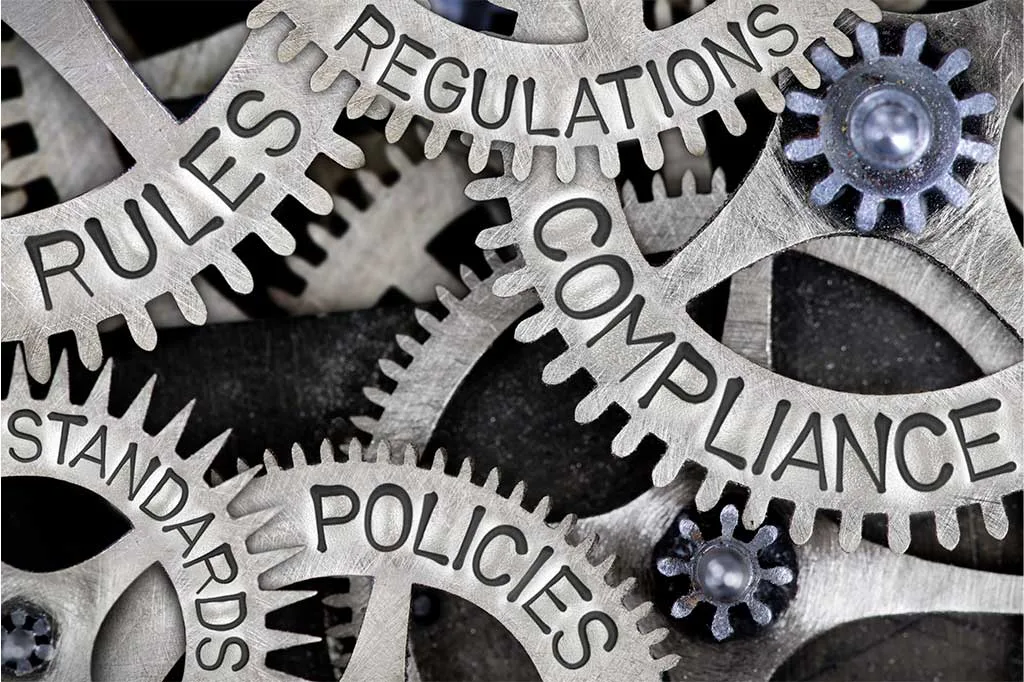
Compliance (from the English to comply—to conform, to adhere to) refers to a company’s adherence to applicable laws, internal policies, industry standards, and regulatory requirements. In a business context, it is a system for preventing violations and mitigating risks.
In 2024–2025, against the backdrop of active post-war recovery and integration into European markets, Ukrainian companies are increasingly becoming the subject of audits to ensure compliance with international law and ethical standards. This is particularly true for companies that:
- attract foreign investment;
- participate in grant programs;
- They enter into contracts with companies from the EU, the U.S., and the U.K.
A compliance audit is not just a “legal review,” but a thorough analysis of a company’s reputation, corporate structure, financial reporting, tax compliance, anti-corruption policies, cybersecurity, and personal data protection. Its purpose is to identify potential violations that could jeopardize cooperation with an investor.
LEGAL BASIS AND INTERNATIONAL REQUIREMENTS FOR COMPLIANCE
At the legislative level in Ukraine, corporate governance and accountability mechanisms are already in place, laying the foundation for the development of a compliance system. For example:
- The Law of Ukraine “On Preventing Corruption” requires the existence of an anti-corruption program for state-owned and certain private enterprises;
- The Law “On the Protection of Personal Data” establishes obligations regarding the processing and storage of information;
- The provisions of the Criminal Code establish liability for money laundering, official forgery, fraud, and other offenses.
At the same time, international partners are guided by their own policies—for example, the FCPA (Foreign Corrupt Practices Act) in the United States, the UK Bribery Act in the United Kingdom, or the European Commission’s internal regulations. They expect their counterparties in Ukraine to comply with ESG, AML (Anti-Money Laundering), KYC (Know Your Customer), and GDPR (General Data Protection Regulation) standards, as well as the principles of transparency regarding ownership structure.
HOW IS A COMPLIANCE AUDIT CONDUCTED?
The verification process consists of several steps:
1. Identification of a company’s legal structure — analysis of corporate documents, incorporation details, and information about ultimate beneficial owners.
2. Verification of the company’s history and its officers — court records, mentions in registries, sanctions lists, and media coverage are reviewed.
3. Financial and tax reporting — an analysis is conducted of compliance the reports meet the requirements of tax legislation, the presence of tax debts.
4. Assessment of internal policies and procedures — existence of anti-corruption policies, regulations on protection of personal data, cybersecurity, ethical codes.
5. Interviews with management and compliance officers — an assessment of how policies actually function in practice.
6. Risk Assessment and Report Preparation — the investor receives a detailed document listing identified violations and potential reputational or legal risks.
WHAT ARE THE MOST COMMON VIOLATIONS IDENTIFIED BY INVESTORS IN 2024–2025 ?
According to analysis by law firms, the most common “red flags” among Ukrainian companies in 2024–2025 remain:
- the lack of clearly defined internal policies;
- a complex or opaque ownership structure with offshore elements;
- failure to process personal data in accordance with GDPR standards;
- litigation involving former management or corporate disputes;
- late filing of reports, financial violations;
- the use of cash-based schemes or high-risk counterparties.
HOW CAN A LAW FIRM HELP DURING A COMPLIANCE AUDIT?
A law firm can assist with the process in two ways: either by preparing the client for the audit, or by conducting the audit itself on behalf of the investor.
As part of investment preparations, lawyers:
- They conduct a preliminary review of the company and develop a roadmap for addressing deficiencies;
- develop or adapt internal policies (anti-corruption, cybersecurity, ESG);
- prepare internal documentation regarding the ownership structure;
- provide a legal assessment of litigation and tax risks;
- They provide advice on aligning internal procedures with international standards.
WHAT ARE THE CONSEQUENCES FOR A BUSINESS IF IT FAILS A COMPLIANCE AUDIT?
A negative outcome of compliance audits may result in:
- refusal to invest;
- termination of cooperation with an international counterparty;
- inclusion of a bank or donor on the list of high-risk companies;
- reputational damage and media coverage;
- blocking or delaying the receipt of grants or funding.
CONCLUSIONS
Compliance audit — this is not a formality, but a mandatory step in building trust between Ukrainian businesses and Western partners. Its successful completion is a sign of transparency, reliability and compliance with international standards.
Ukrainian companies planning to attract foreign capital should conduct an internal legal review in advance and implement a compliance system. This is not only a market requirement but also a tool for long-term growth and business protection in the changing legal environment of 2025.